
Interlife Toolkit: A Concrete Development Model for the World's Poor Communities - Interlife on Il Fatto Quotidiano

The Interlife development model, its surprising results revealed in the 2024 Impact Report, and its application in Africa and India featured in the pages of Il Fatto Quotidiano.
Here is the full article:

Interlife, an international cooperation organization that has been working in Africa and Asia since 2008 to help reduce poverty and promote food security, child protection, child labor eradication, health, and education, has developed a concrete and revolutionary development model to create job opportunities in contexts of extreme poverty and vulnerability and offer populations an alternative to migration: the ®Interlife Toolkits .
The Interlife Toolkit is a tool for starting family-run micro-businesses . These comprehensive programs provide training, equipment, raw materials, professional skills—in cultivation, breeding, and marketing—and all the support needed to start a business from scratch that can support beneficiaries and their families, triggering a ripple effect of solidarity throughout the community .
Those who receive an Interlife Toolkit, after starting a family business, commit to creating a new Toolkit with the products and income from their business and donating it to another person in need, so they can receive the same opportunities, skills, and everything they need to start another income-generating activity. The cost decreases as the number of beneficiaries increases.
The Interlife Toolkit draws on existing models of social finance and solidarity economy , merging the characteristics of microcredit and social enterprise while overcoming their respective limitations. It represents an innovative alternative to other existing forms of social economy, acting as a catalyst at the local level for the creation of economic and employment opportunities where poverty and unemployment seem insurmountable.
It's a fully sustainable green model . Each Interlife Toolkit is designed not only to meet the needs of beneficiaries and local markets, but also, and above all, to address the environment and the conservation and promotion of natural resources.
The production cycle of the various Toolkits offered by Interlife is entirely sustainable and aims to enhance the natural resources present on site , promoting a path of responsible, long-lasting and balanced growth, respectful of the environment, biodiversity and the natural resources of today and tomorrow.
Furthermore, Interlife's commitment to the environment also includes the reforestation of sub-Saharan areas at risk of desertification . All Interlife projects involve the planting of trees with high nutritional value to contribute to local food security and protect the intervention areas from erosion and desertification.
Interlife in Africa has already offered 4,000 unemployed young people, aged between 18 and 40, training and work opportunities , with the distribution of Interlife Toolkits capable of offering future prospects of work and well-being to thousands of families (3,000 in Ivory Coast and 1,000 in Burkina Faso).
Interlife's intervention therefore represents an alternative solution to irregular migration.
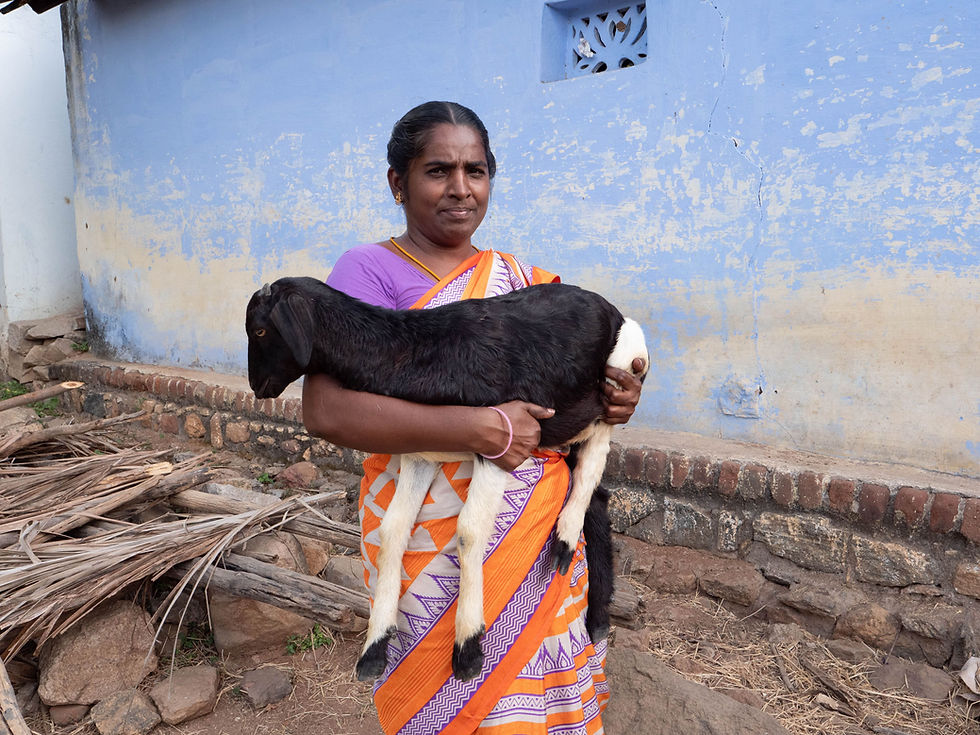
In India, Interlife works in the most marginalized rural areas with health, economic, and social projects, with a specific focus on children . To protect them and ensure the healthy growth and happy childhood they deserve, Interlife implements targeted programs for protection, school reintegration, and the fight against child labor, aiming to ensure protection, medical care, and food security.
Finally, a report on this topic was recently presented in Rome by the Etisos Foundation. It used the 17 UN Sustainable Development Goals (SDGs) as a reference to explore the sustainability of the Interlife Toolkit model methodology within the SDG framework. Overall, the score achieved was over 80%. Furthermore, the results obtained for each of the 17 SDGs demonstrate how Interlife has fully understood the importance of the interdependence of the various dimensions of sustainability.


IDME KPM Login ialah sistem dalam talian yang digunakan oleh warga Kementerian Pendidikan Malaysia untuk mengakses pelbagai perkhidmatan pendidikan secara berpusat. Melalui platform ini, pengguna seperti guru, pelajar dan pentadbir boleh log masuk menggunakan identiti digital yang selamat bagi mengurus data, maklumat sekolah serta urusan berkaitan pembelajaran. Sistem IDME KPM membantu meningkatkan kecekapan pengurusan maklumat dan memastikan keselamatan akses pengguna. Ia direka mesra pengguna, mudah dicapai, dan menyokong transformasi digital dalam sektor pendidikan Malaysia.